








The platform
Altitude medicine in a digital format
High-altitude travel exposes millions of people to hypoxia-related health risks every year. Symptoms such as headache, dizziness or fatigue are common, while the individual susceptibility and progression of altitude illness remain difficult to assess.
HAMIX combines a mobile application with a research-oriented web platform to support structured symptom tracking, visual trend analysis and the transfer of evidence-based medical knowledge.
The mobile application allows users to document symptoms, vital signs and altitude progression directly during a tour, while the associated web portal enables researchers and medical experts to manage questionnaires, educational content and research data.
The project is being developed as part of a bachelor’s thesis at Bern University of Applied Sciences in collaboration with University Hospital Zurich.
Anyone can get altitude sickness, but no one should die from it.
Dr. Charles Houston (1913-2009)
The app
Understanding high altitude through data
The HAMIX mobile application is designed to support travellers during high-altitude tours through structured recording of symptoms, vital signs and environmental parameters.
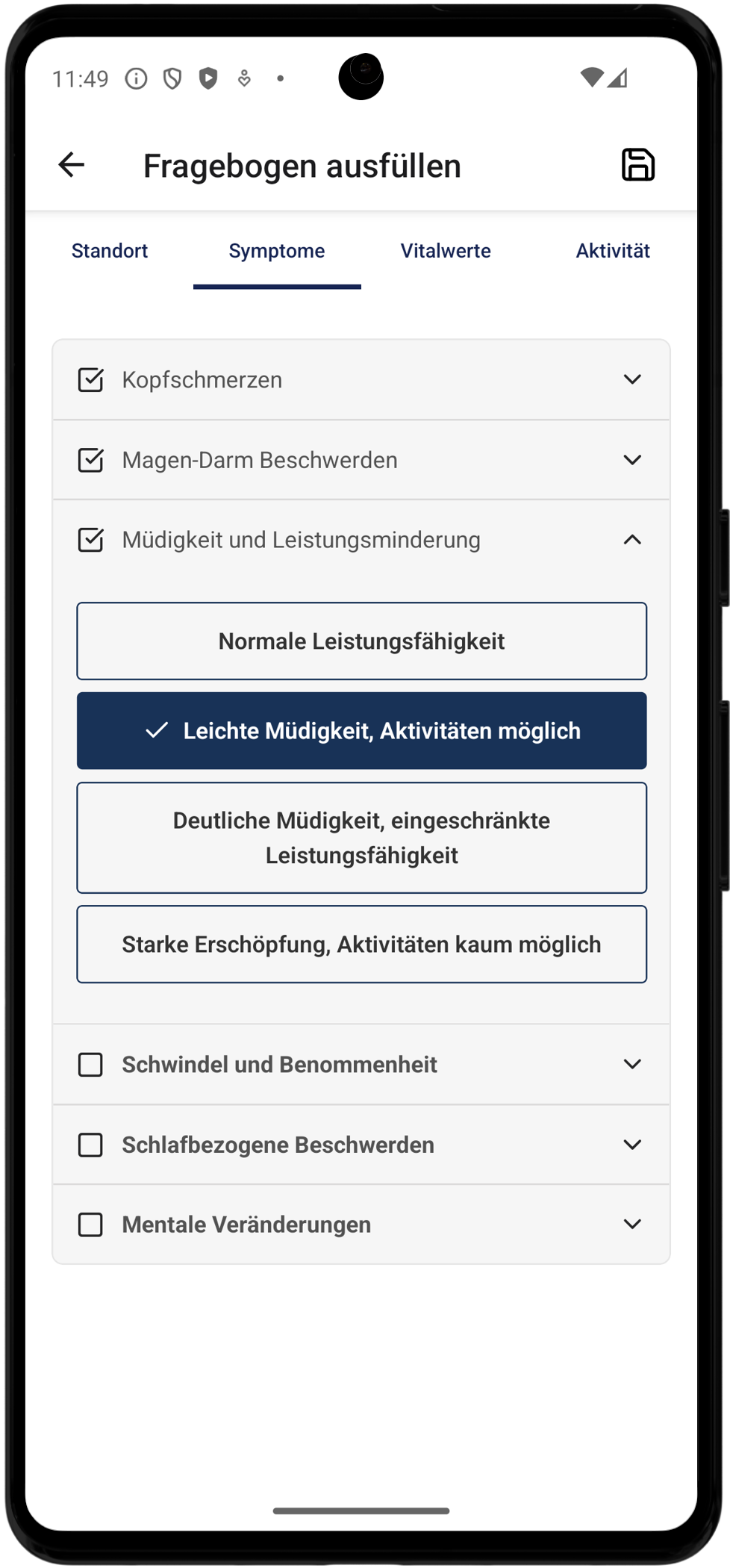
Users can document altitude-related symptoms, oxygen saturation, heart rate and additional contextual information through configurable check-ins directly on the smartphone — even in remote environments with limited connectivity.
Based on the recorded data, the application provides visual trend overviews and altitude-related progressions to support personal interpretation and awareness during acclimatization. In addition, integrated educational content provides compact information about altitude medicine, prevention strategies and warning signs of severe altitude illness.
The application focuses on a clear and accessible user experience while enabling standardized and medically relevant data collection in the background.
Visualizing acclimatization and symptom progression
The HAMIX application combines structured health documentation with multiple visualization formats to support interpretation of altitude-related changes during a tour.
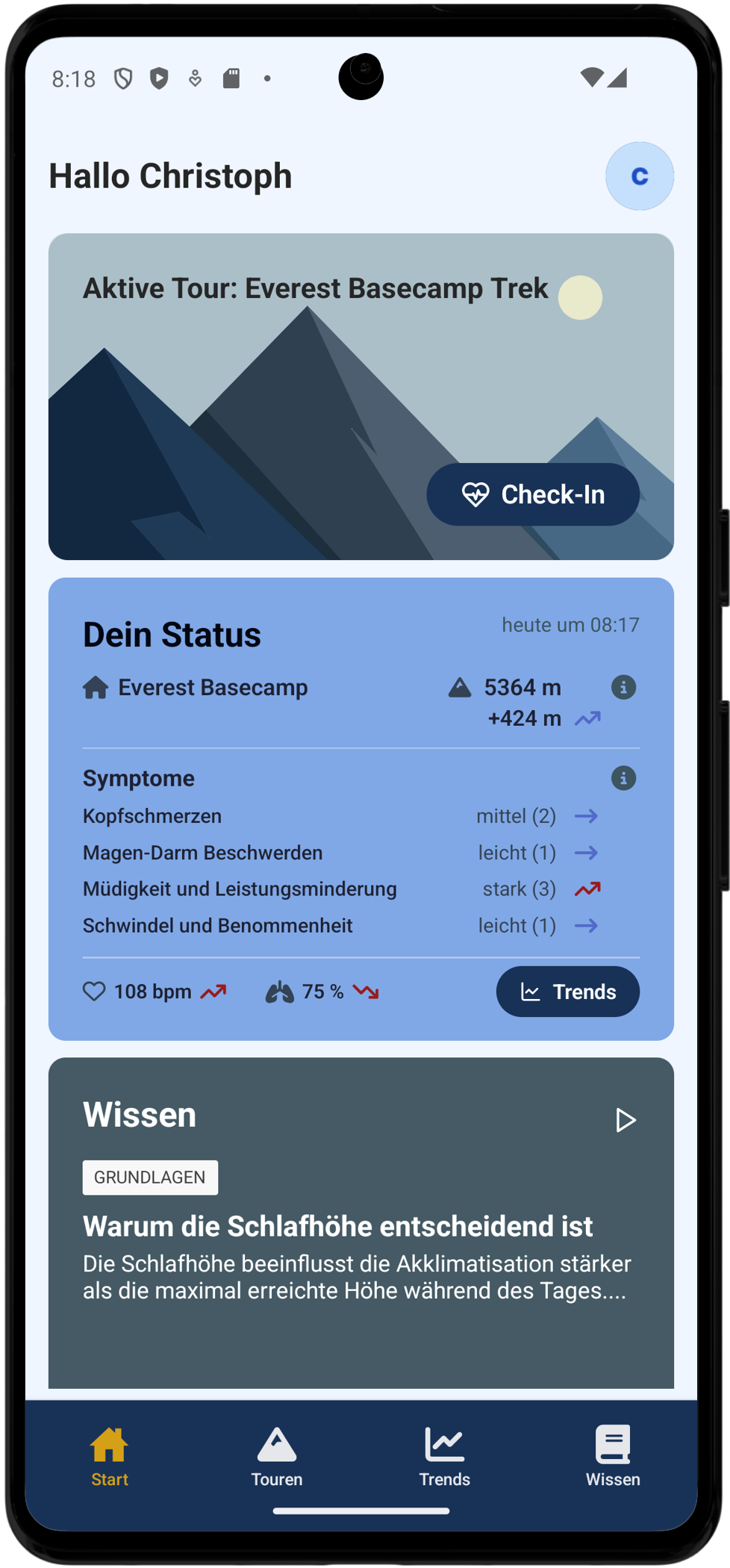
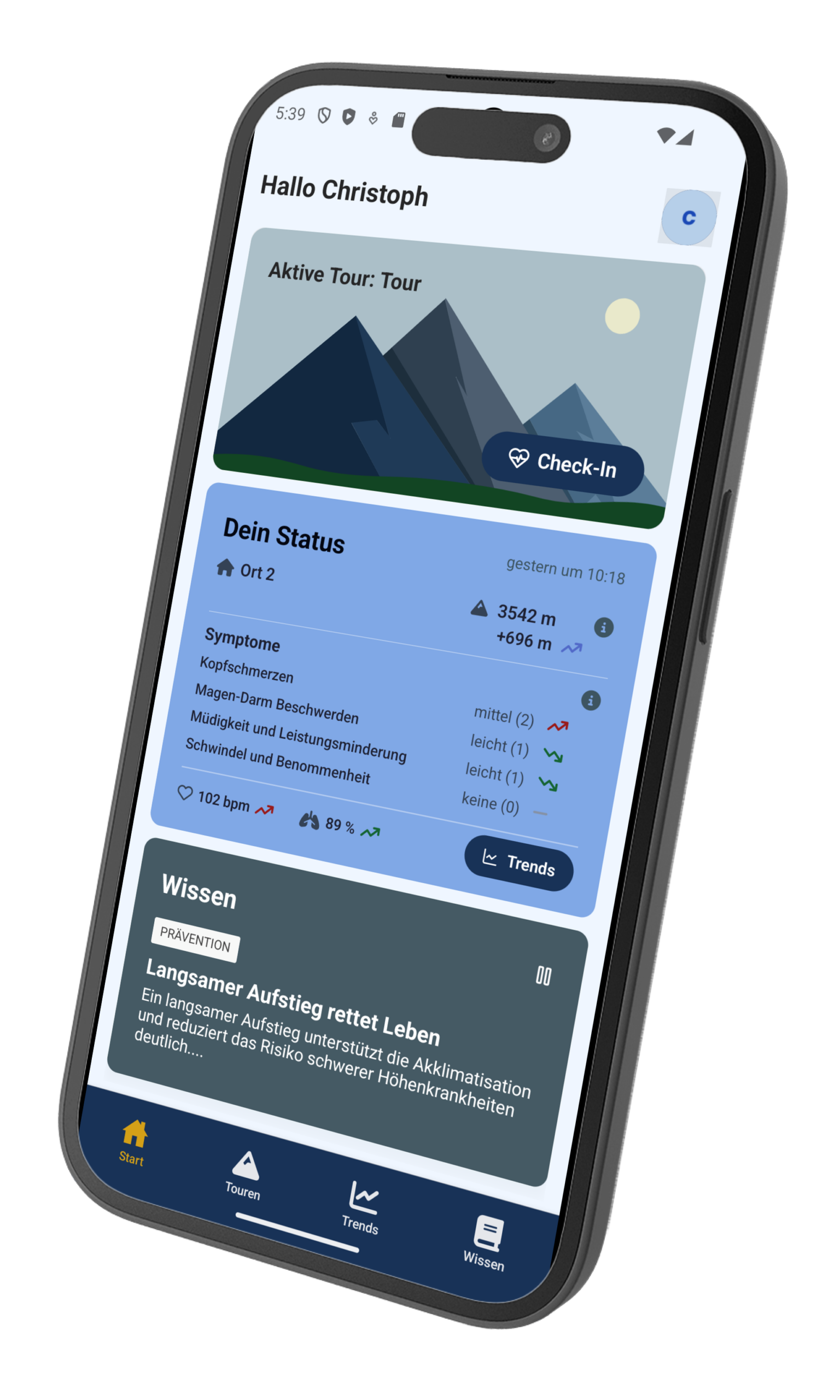
Users can complete configurable check-ins directly on the smartphone to record symptoms, oxygen saturation, heart rate, altitude and additional contextual information — even in remote environments with limited connectivity. Based on the recorded data, the application provides status summaries that highlight recent developments, current altitude conditions and potential warning signs during acclimatization.
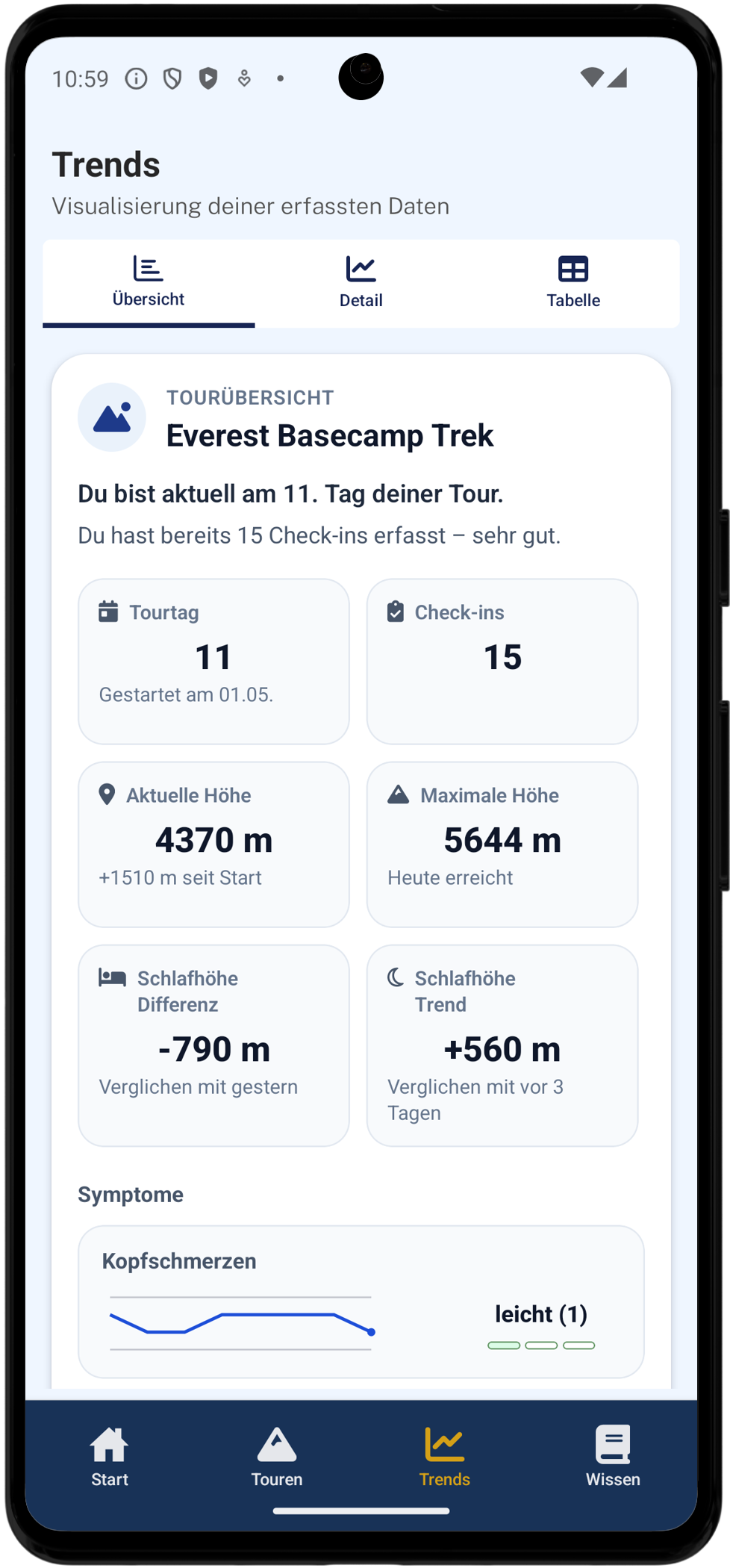
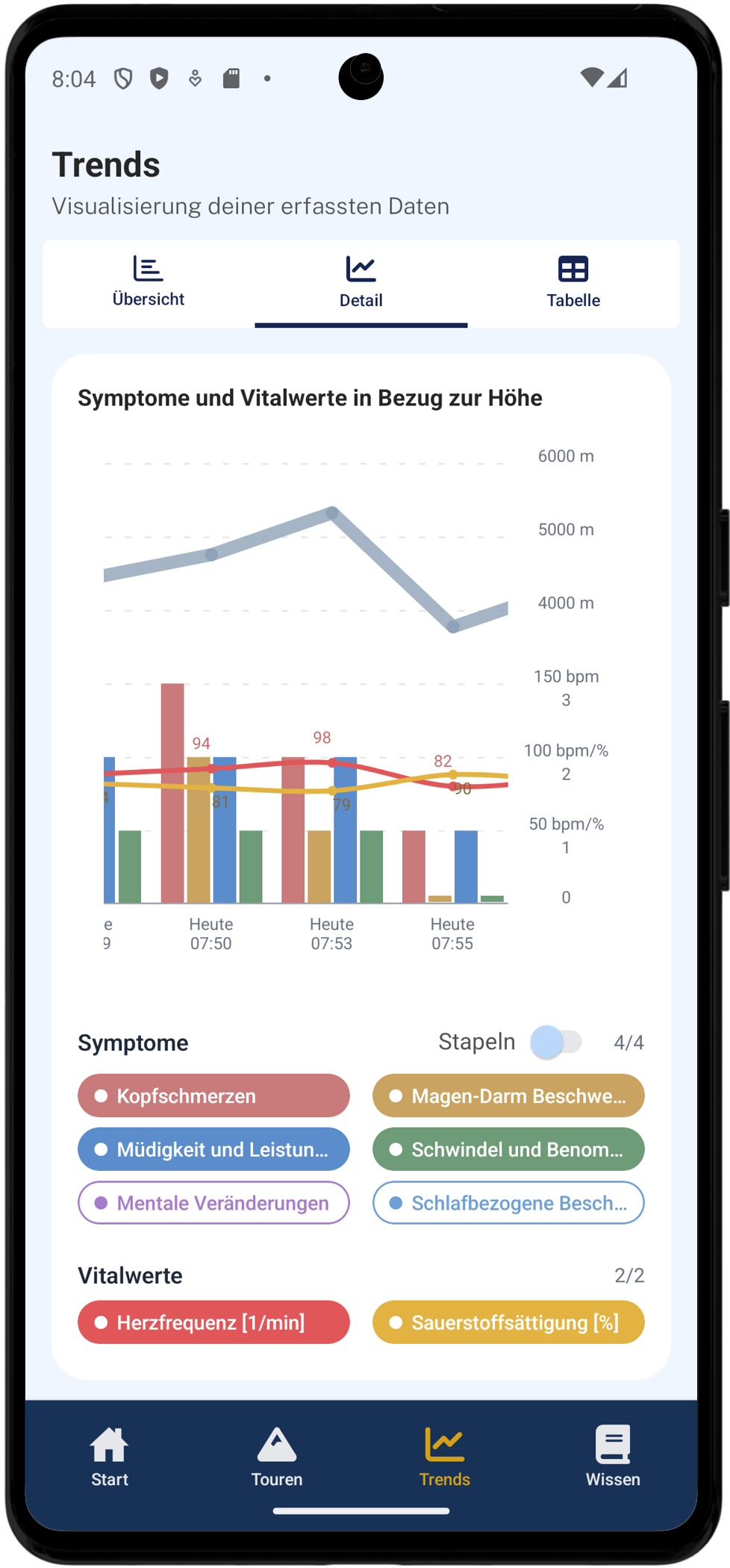
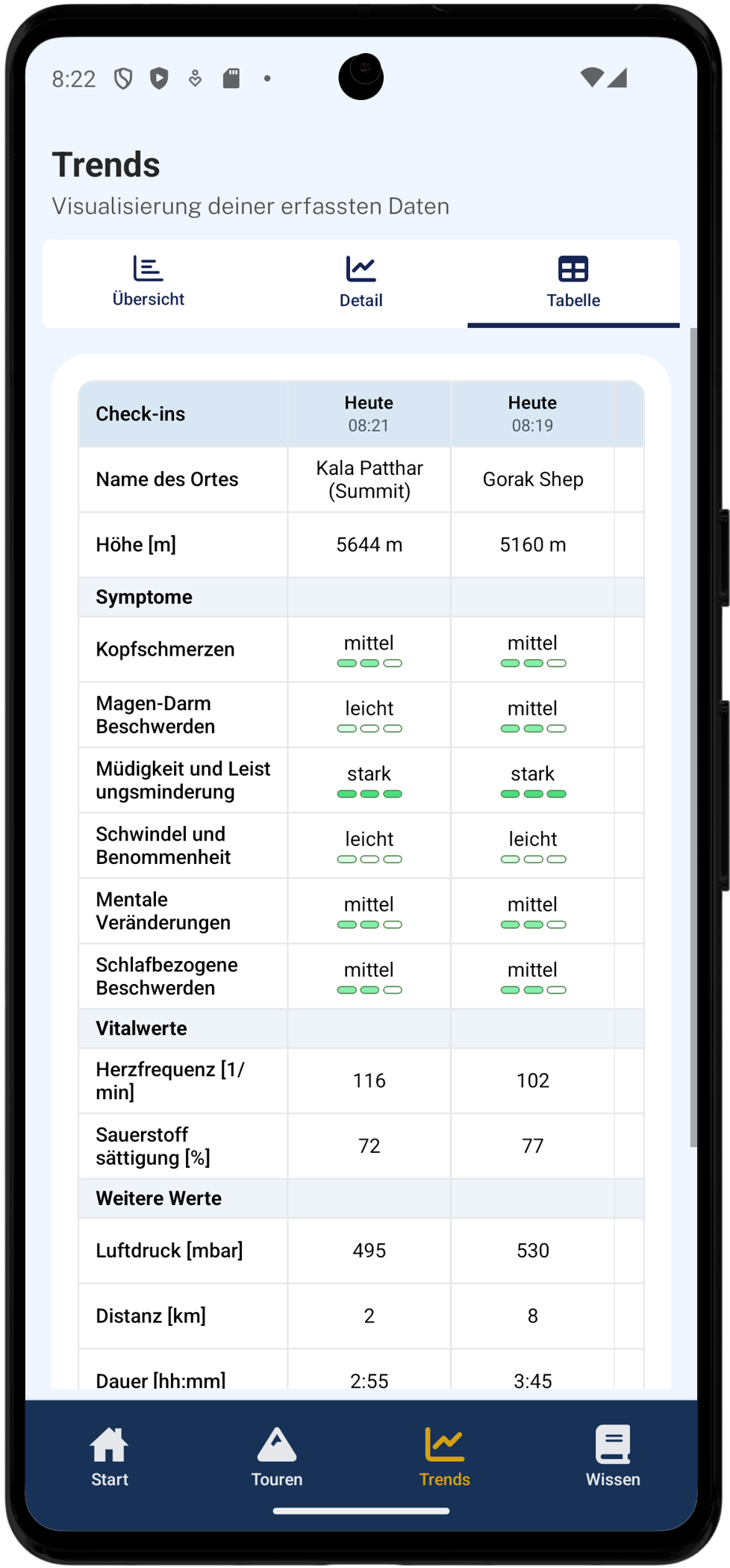
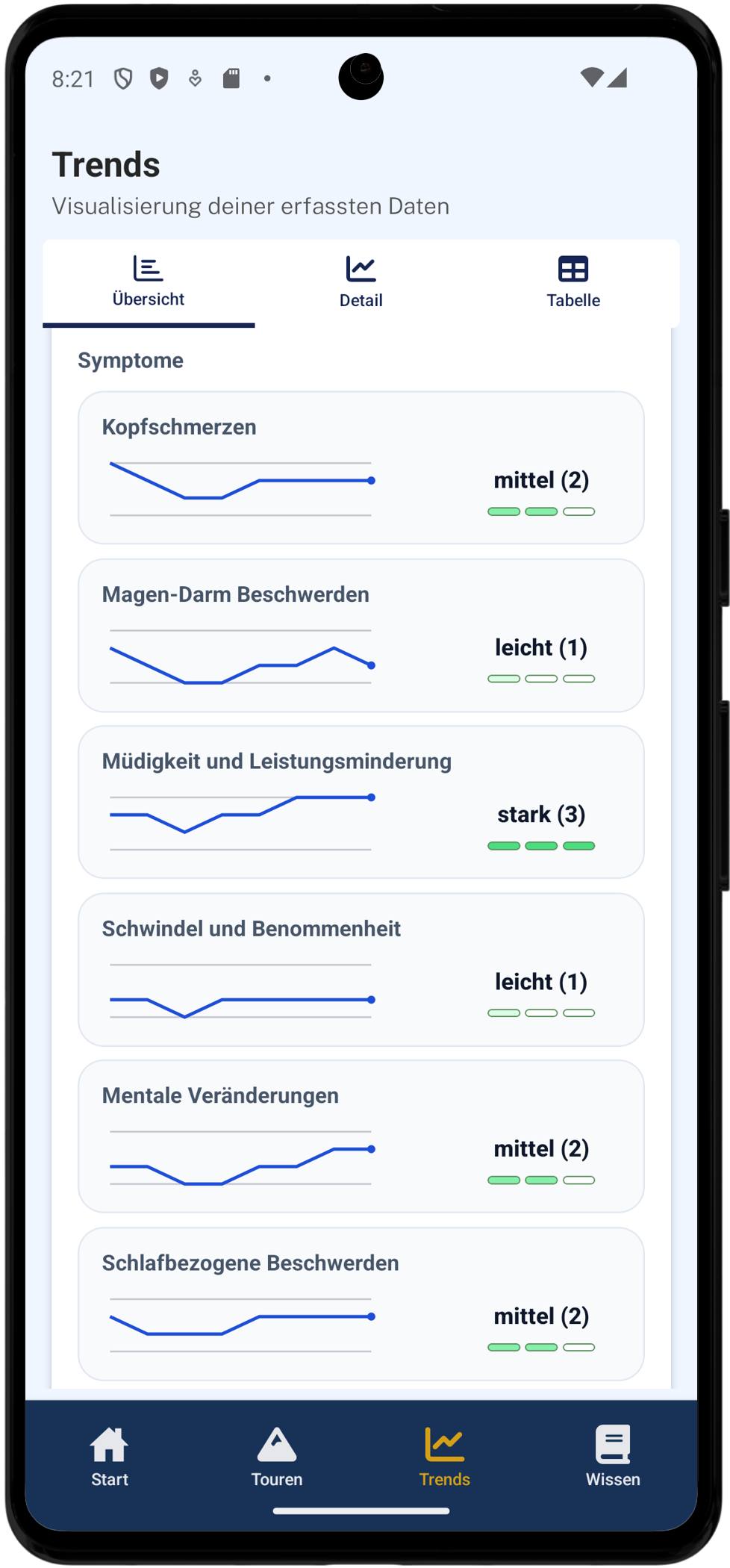
Overview screens summarize acclimatization progress, symptom development and altitude-related trends, while detailed visualizations allow symptoms and vital parameters to be analyzed in relation to altitude progression over time. Tabular representations additionally provide a compact chronological history of recorded check-ins and measured parameters throughout the tour.
The visualizations are intended to support awareness and self-observation rather than automated diagnosis. By combining symptoms, vital signs and altitude profiles within a unified interface, users can better recognize patterns associated with acclimatization and altitude-related health changes during ascent.
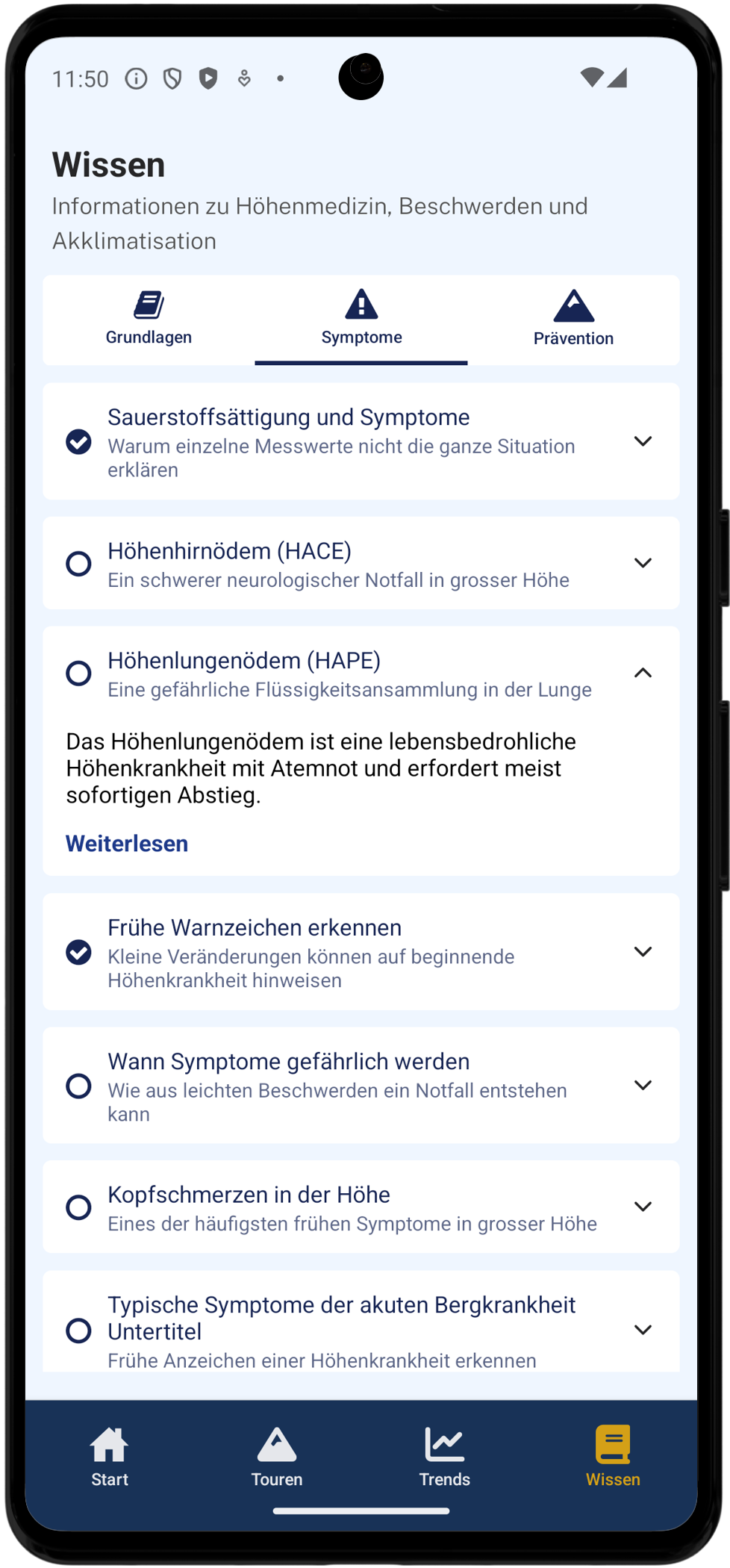
Integrated educational content additionally provides compact evidence-based information about altitude medicine, prevention strategies, acclimatization and warning signs of severe altitude illness directly within the application.
The HAMIX application combines structured health documentation with multiple visualization formats to support interpretation of altitude-related changes during a tour.
Users can complete configurable check-ins directly on the smartphone to record symptoms, oxygen saturation, heart rate, altitude and additional contextual information — even in remote environments with limited connectivity. Based on the recorded data, the application provides status summaries that highlight recent developments, current altitude conditions and potential warning signs during acclimatization.
Overview screens summarize acclimatization progress, symptom development and altitude-related trends, while detailed visualizations allow symptoms and vital parameters to be analyzed in relation to altitude progression over time. Tabular representations additionally provide a compact chronological history of recorded check-ins and measured parameters throughout the tour.
The visualizations are intended to support awareness and self-observation rather than automated diagnosis. By combining symptoms, vital signs and altitude profiles within a unified interface, users can better recognize patterns associated with acclimatization and altitude-related health changes during ascent.
Integrated educational content additionally provides compact evidence-based information about altitude medicine, prevention strategies, acclimatization and warning signs of severe altitude illness directly within the application.
The portal
Research and content management for altitude medicine
The HAMIX web portal enables researchers and medical experts to manage questionnaires, educational content and research-related data within a centralized platform.
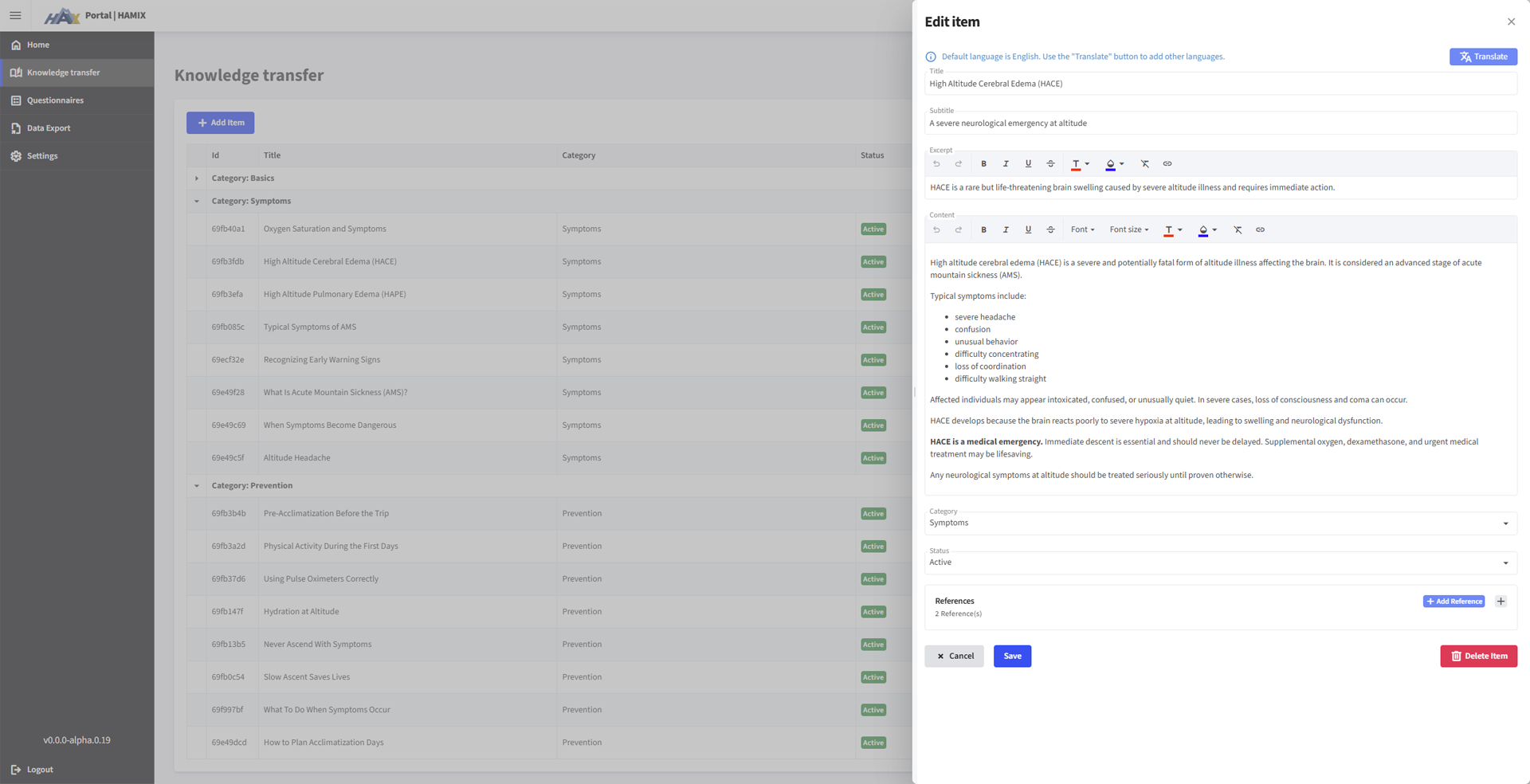
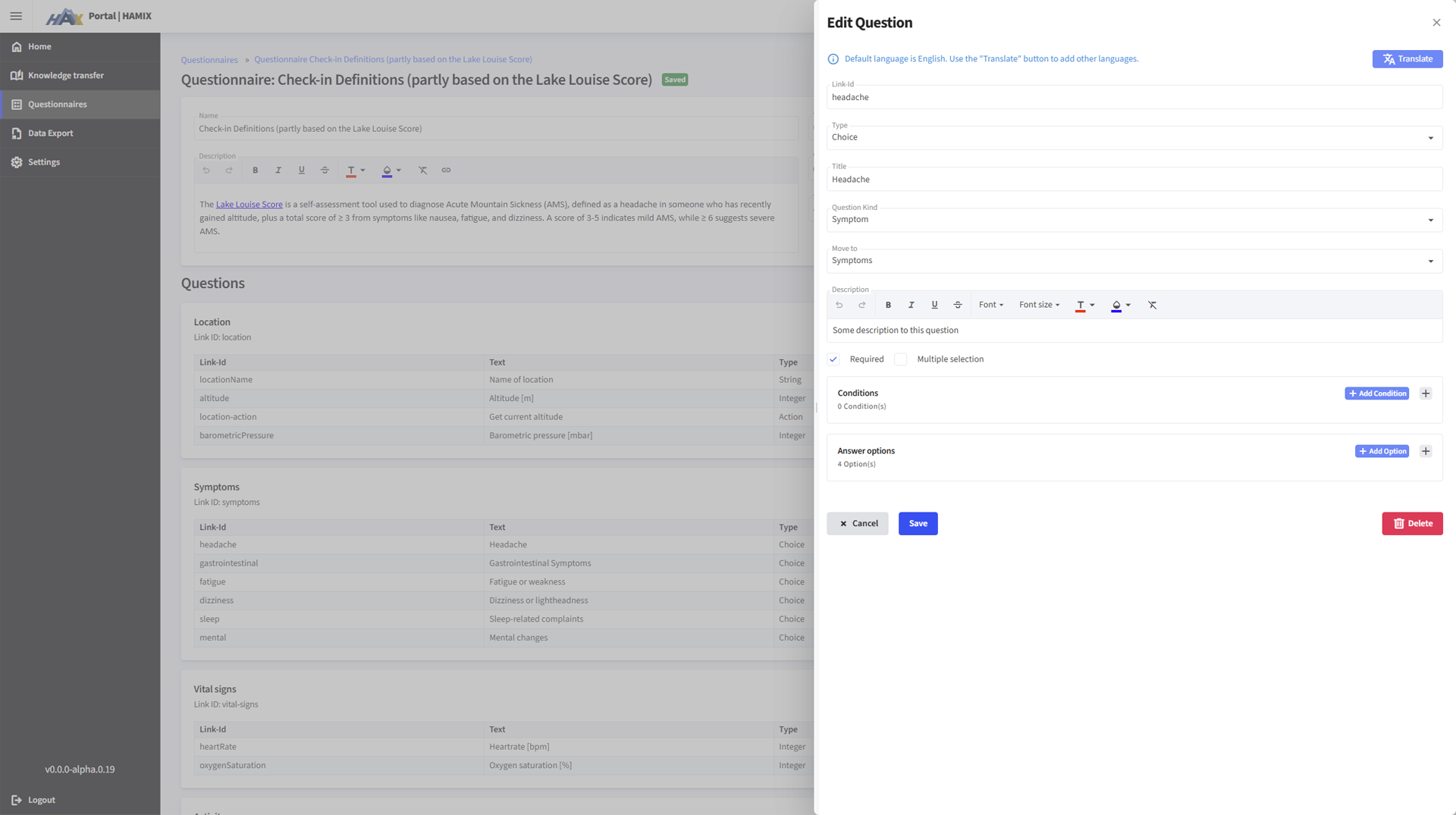
FHIR-based questionnaires can be configured and adapted for different purposes such as tour preparation, personal baseline information or regular high-altitude check-ins. In addition, the portal allows the creation and maintenance of educational articles related to altitude medicine, prevention strategies and acclimatization.
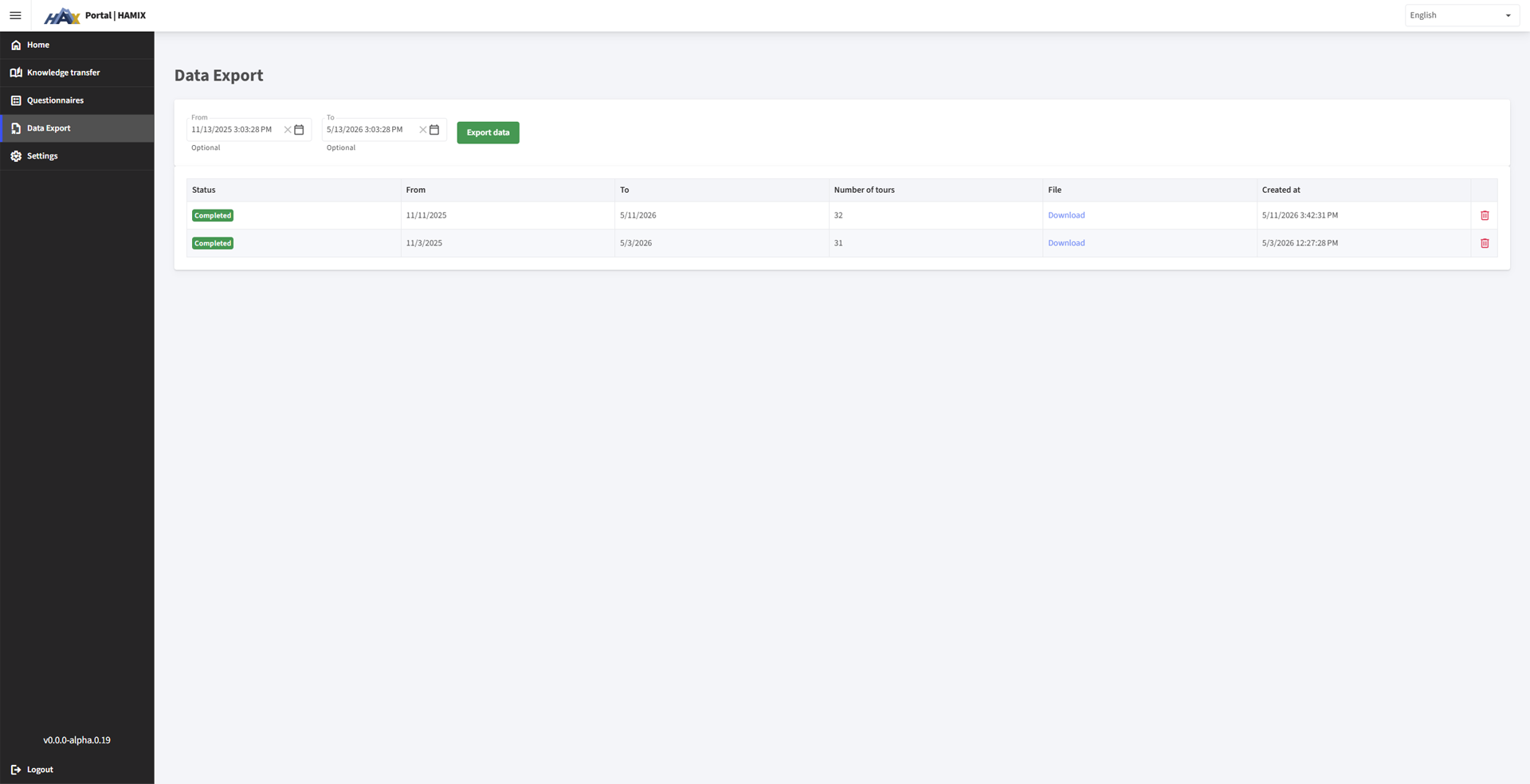
Collected data can be reviewed and exported in a structured format to support further scientific evaluation and future research projects. The platform focuses on flexibility, standardized data structures and practical usability for medical and research-oriented workflows.
Configurable questionnaires and research workflows
The HAMIX web portal enables researchers and medical experts to configure FHIR-based questionnaires for different scenarios such as tour preparation, baseline assessments and high-altitude check-ins.
In addition to questionnaire management, the platform supports the creation of educational content related to altitude medicine, prevention strategies and acclimatization. Structured data exports additionally enable research-oriented workflows and further scientific evaluation.
The portal focuses on standardized data structures, flexible configuration and practical usability for research and medical content management.
The HAMIX web portal enables researchers and medical experts to configure FHIR-based questionnaires for different scenarios such as tour preparation, baseline assessments and high-altitude check-ins.
In addition to questionnaire management, the platform supports the creation of educational content related to altitude medicine, prevention strategies and acclimatization. Structured data exports additionally enable research-oriented workflows and further scientific evaluation.
The portal focuses on standardized data structures, flexible configuration and practical usability for research and medical content management.
Download
Access the HAMIX platform
The HAMIX ecosystem consists of a mobile application for high-altitude travellers and a research-oriented web portal for medical experts and researchers.
The Android application can be downloaded directly as an APK file, while the web portal provides access to questionnaire management, educational content and research-oriented workflows.
(Android installation outside the Play Store may require additional security confirmation.)
Android installation
The HAMIX Android application is distributed outside the Google Play Store. Depending on the device settings, Android may require additional confirmation to allow installation from unknown sources.
iOS availability
An iOS version of HAMIX is currently not publicly available. Future iPhone support may be provided through Apple TestFlight or the App Store at a later stage of the project.
The science
Evidence-based altitude medicine
HAMIX is based on established medical recommendations and current scientific literature related to high-altitude medicine, acute mountain sickness and acclimatization.
The platform combines evidence-based educational content with structured collection of altitude-related health data such as symptoms, vital signs and environmental parameters. With the user’s consent, anonymized data may contribute to future research projects and the further development of altitude medicine.
Scientific support and medical expertise are provided in collaboration with specialists from University Hospital Zurich.
Selected scientific articles on altitude medicine

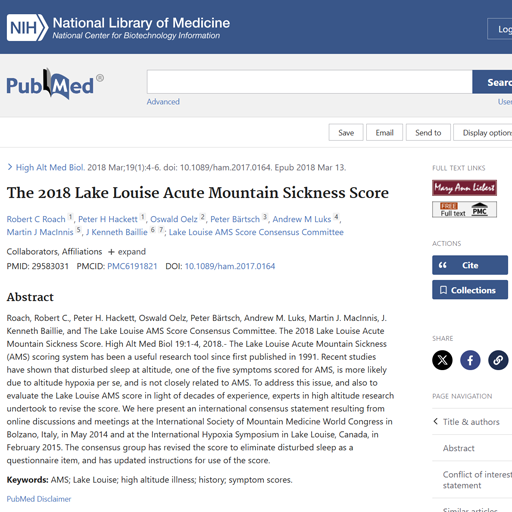
The 2018 Lake Louise Acute Mountain Sickness Score
DOI: 10.1089/ham.2017.0164
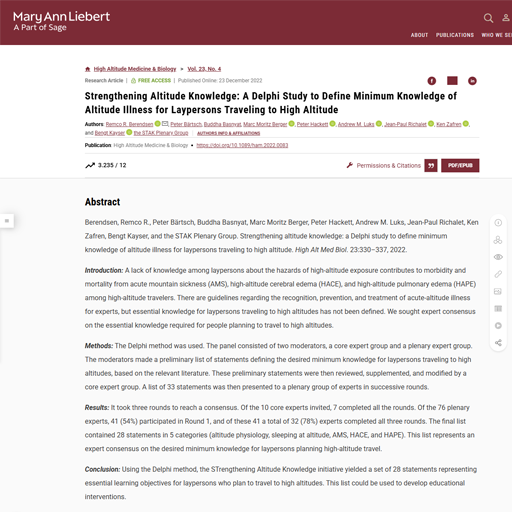
Strengthening Altitude Knowledge:
A Delphi Study
DOI: 10.1089/ham.2022.0083
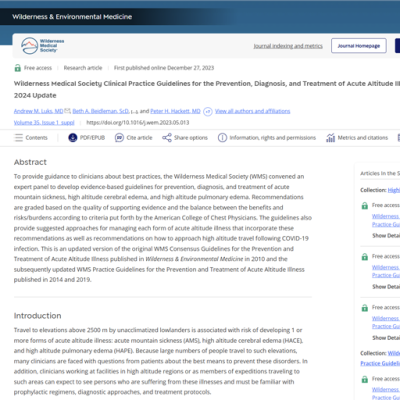
Clinical Practice Guidelines for the Prevention, Diagnosis, and Treatment of Acute Altitude Illness
DOI: 10.1016/j.wem.2023.05.013
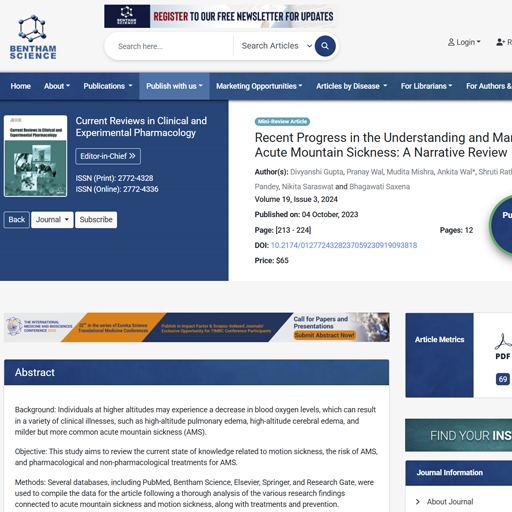
Recent Progress in the Understanding and Management of Acute Mountain Sickness: A Narrative Review
DOI: 10.2174/0127724328237059230919093818
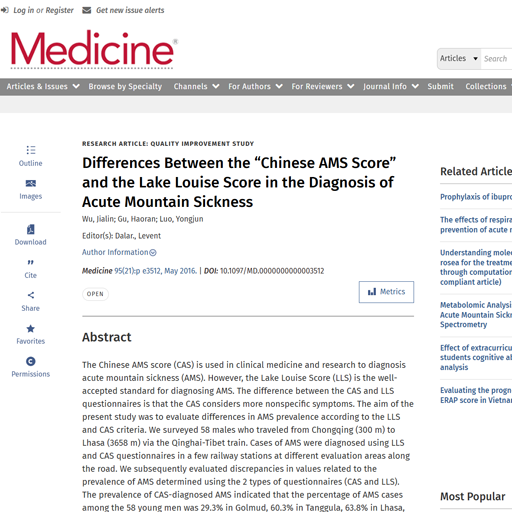
Differences Between the “Chinese AMS Score” and the Lake Louise Score in the Diagnosis of Acute Mountain Sickness
DOI: 10.1097/MD.0000000000003512
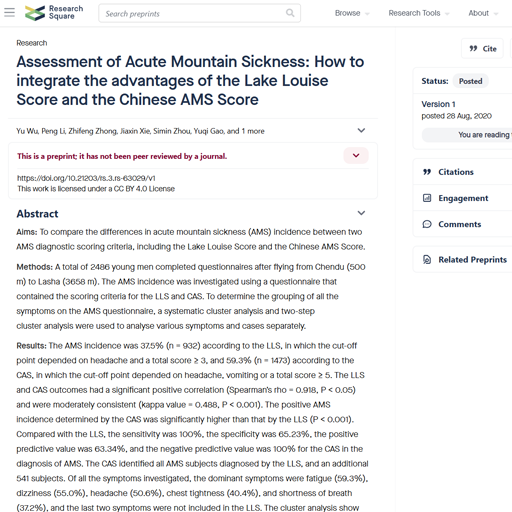
Assessment of AMS: How to integrate the advantages of the Lake Louise Score and the Chinese AMS Score
DOI: 10.21203/rs.3.rs-63029/v1
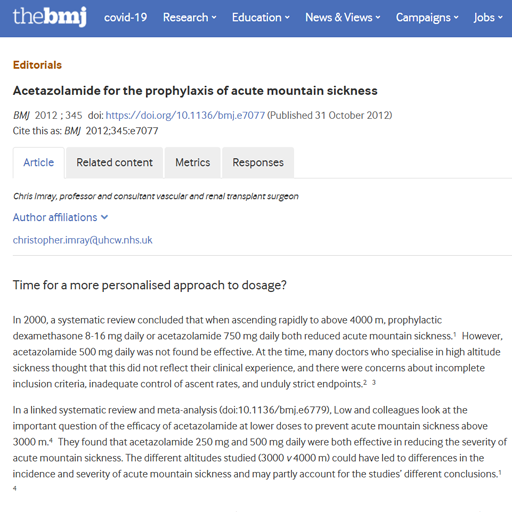
Acetazolamide for the prophylaxis of acute mountain sickness
DOI: 10.1136/bmj.e7077
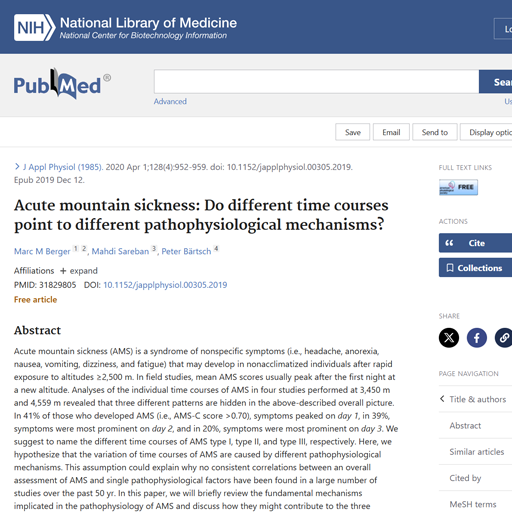
Acute mountain sickness: Do different time courses point to different pathophysiological mechanisms?
DOI: 10.1152/japplphysiol.00305.2019
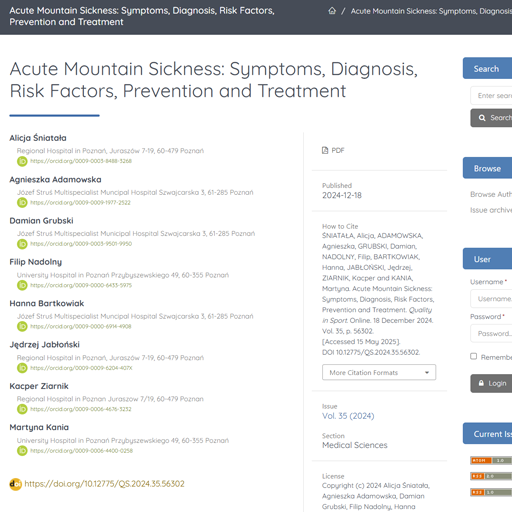
AMS: Symptoms, Diagnosis, Risk Factors, Prevention and Treatment
DOI: 10.12775/QS.2024.35.56302

The 2018 Lake Louise Acute Mountain Sickness Score
DOI: 10.1089/ham.2017.0164

Strengthening Altitude Knowledge:
A Delphi Study
DOI: 10.1089/ham.2022.0083

Clinical Practice Guidelines for the Prevention, Diagnosis, and Treatment of Acute Altitude Illness
DOI: 10.1016/j.wem.2023.05.013

Recent Progress in the Understanding and Management of Acute Mountain Sickness: A Narrative Review
DOI: 10.2174/0127724328237059230919093818

Differences Between the “Chinese AMS Score” and the Lake Louise Score in the Diagnosis of Acute Mountain Sickness
DOI: 10.1097/MD.0000000000003512

Assessment of AMS: How to integrate the advantages of the Lake Louise Score and the Chinese AMS Score
DOI: 10.21203/rs.3.rs-63029/v1

Acetazolamide for the prophylaxis of acute mountain sickness
DOI: 10.1136/bmj.e7077

Acute mountain sickness: Do different time courses point to different pathophysiological mechanisms?
DOI: 10.1152/japplphysiol.00305.2019

AMS: Symptoms, Diagnosis, Risk Factors, Prevention and Treatment
DOI: 10.12775/QS.2024.35.56302
About us
Different Strengths. One Vision.
The project is being realized by two students of medical informatics at the Bern University of Applied Sciences. What unites us is the goal of using digital means to create real added value for the health of people at high altitudes.
We bring different perspectives to the table: practical experience from the healthcare sector and technical expertise in software development. This combination allows us to effectively bring together medical requirements and technological solutions – for an app that not only works, but actually helps in an emergency.
The project is being implemented as part of a bachelor’s thesis – supervised by a professor at BFH and supported by an experienced team of scientists from the University Hospital Zurich. The experts in high-altitude medicine contribute the latest medical findings, advise on the selection of relevant content and provide technical support during development. They check which data should be collected and ensure that it is medically appropriate, methodologically valid and scientifically useful.
Together, we are pursuing the goal of developing a digital application,
, which not only protects individual health, but also contributes to the further development of altitude medicine
– through practice-relevant data, well-founded recommendations and a consistently user-oriented implementation.
Software Engineer @ SwissDRG AG
Junior-Consultant / Developer for GIS
Apprenticeship as a Software Developer
Medical IT Specialist @ Landesspital Liechtenstein

Diploma in nursing with special training and several years of experience in cardiac care units, pulmonary intensive care units and in anesthesia. Graduated from a higher technical school.
Bern University of Applied Sciences (BFH)
University Hospital Zurich (USZ)
For research collaborations, project-related questions or feedback regarding the HAMIX platform, please contact the project team via: contact(et)hamix.app